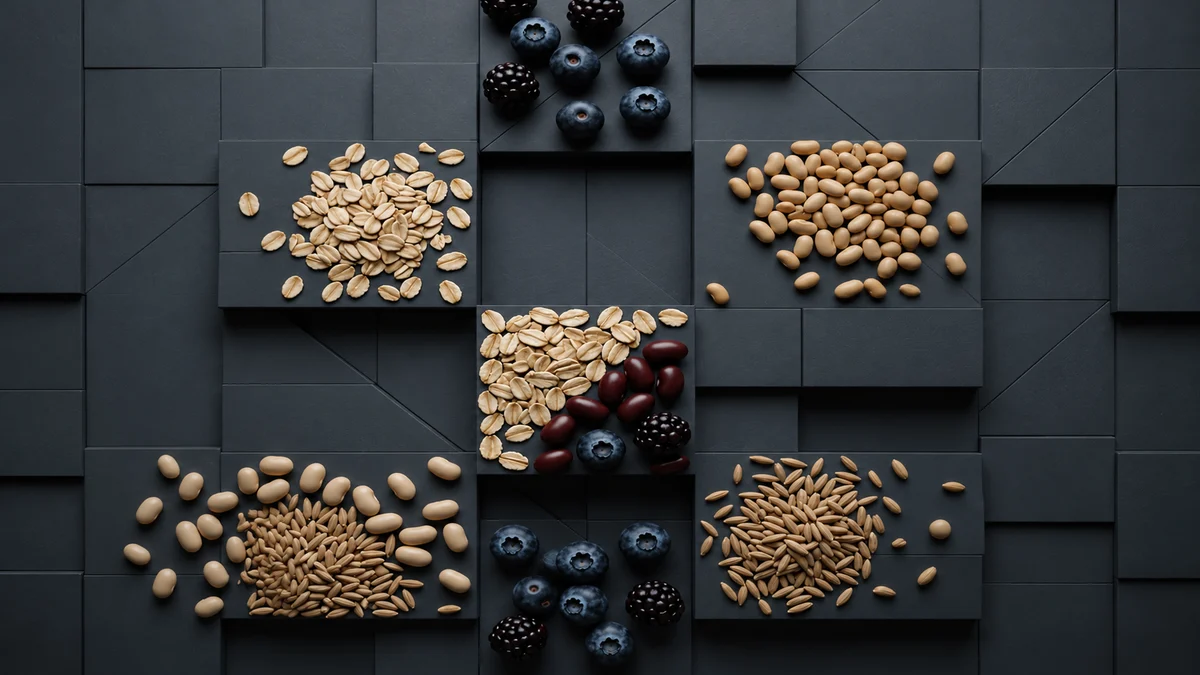
A small daily gap with significant health implications
The case for eating more fiber is much bigger than digestion. A major systematic review found that people with the highest fiber intakes had 15–30% lower rates of all-cause and cardiovascular mortality than those with the lowest intakes. Higher intake was also associated with lower incidence of coronary heart disease, stroke, type 2 diabetes, and colorectal cancer, with the clearest benefits around 25–29 g per day (Reynolds et al., 2019).
More focused analyses point in the same direction:
- Each additional 7 g per day of total fiber was associated with about a 9% lower risk of a first cardiovascular disease event (Threapleton et al., 2013).
- Each additional 10 g per day was associated with about a 10% lower risk of colorectal cancer (Aune et al., 2011).
At EU level, the estimated burden is already substantial. Diets low in fiber accounted for almost 60,000 deaths and more than one million disability-adjusted life years in the EU in 2019, according to the European Commission’s Knowledge for Policy gateway using Global Burden of Disease estimates. Most of that burden came from ischemic heart disease and stroke, with an additional contribution from colorectal cancer (European Commission Knowledge for Policy, dietary fibre).
A disability-adjusted life year combines years of life lost with years lived in reduced health. It is not a prediction that eating a specific amount of fiber will prevent a specific event. It is a population model showing that consistently low intake contributes meaningfully to the EU’s wider chronic-disease burden.
The risk reductions above are also population-level associations, not guarantees about an individual outcome. Diet is only one part of long-term health, and observational research cannot remove every difference between people who eat more or less fiber. The consistency across outcomes and study types does make the gap important enough to take seriously.
Europe is still falling short
Despite those associations, available national surveys commonly place European adult intake at only 16–24 g per day. A perfectly harmonized EU average is not available because surveys differ in timing, age groups, food-recording methods, and definitions of fiber. The overall direction is nevertheless clear: low intake is widespread rather than confined to one member state (European Commission Knowledge for Policy, intake overview).
The European Food Safety Authority considers 25 g of dietary fiber per day adequate for normal bowel function in adults, while WHO advises people older than 10 to consume at least 25 g per day of naturally occurring fiber from foods (EFSA, 2010; WHO, Healthy diet).
Some European frameworks aim higher. Public-health guidance commonly uses a target around 30 g per day, while the Nordic Nutrition Recommendations use at least 3 g per megajoule of energy. At reference energy intakes, that corresponds to approximately 25 g per day for women and 35 g per day for men—a Nordic, energy-adjusted recommendation rather than a universal EU target (Nordic Nutrition Recommendations, 2023).
For someone eating around 18–20 g per day, closing the gap does not require one magical food. It usually means building another 5–10 g into the meals repeated most days.
Why so many people still fall short
The main sources of fiber are not mysterious: wholegrain cereals, legumes, vegetables, fruit, nuts, and seeds. The gap exists because these foods do not appear often enough across the day, while refined grains and more heavily processed convenience foods remain easy defaults (European Commission Knowledge for Policy, dietary fibre).
That is partly personal routine, but it is also structural. Price, product availability, cooking facilities, work schedules, school and workplace meals, marketing, and food culture all influence which choice becomes normal. Differences between national survey methods prevent a clean EU-wide inequality estimate, but the available European evidence repeatedly shows lower fiber intake among groups facing greater socioeconomic constraints (European Commission Knowledge for Policy, intake overview).
So “just eat better” is not a complete answer. Useful advice has to work with ordinary supermarkets, limited time, familiar meals, and realistic budgets.
A realistic way to add 5–10 g per day
Instead of redesigning everything at once, add one fiber-rich decision to meals you already eat.
Upgrade one grain default
Choose a wholegrain bread, oat-based breakfast, wholegrain pasta, barley, rye, or brown rice more often in place of its refined equivalent. The advantage of a default swap is repetition: breakfast or bread choices can quietly influence intake every day.
Give legumes a regular role
Beans, lentils, chickpeas, and peas do not need to become the entire meal. Add them to soups, stews, salads, pasta sauces, wraps, or grain bowls, or use them to replace part of the meat in a familiar recipe.
Put plants into more eating occasions
One large vegetable serving at dinner may not compensate for a low-fiber rest of the day. Fruit with breakfast, vegetables at lunch, berries with yogurt, or nuts and seeds as part of a snack spread fiber sources across the day.
Build a backup meal
Keep one low-effort combination available for busy days: for example, canned beans, frozen vegetables, a whole grain, and a simple sauce. Convenience is not the enemy; a useful convenience meal simply needs better ingredients.
These changes align with the food sources emphasized by EFSA, WHO, and European nutrition guidance rather than treating fiber as an isolated number (EFSA, 2010; WHO, Healthy diet).
Increase gradually and pay attention to tolerance
Moving from a low-fiber pattern to a much higher intake overnight can cause bloating, gas, or changes in bowel habits. Increase intake progressively, drink enough fluid, and give your routine time to adjust.
People with persistent digestive symptoms, swallowing difficulties, a history of bowel obstruction, or a medically prescribed low-fiber diet should seek individualized advice before making a large change. A general population target is useful, but it is not a replacement for clinical guidance.
Make the better pattern easier to repeat
Closing the EU fiber gap will require changes in food supply, pricing, public meals, and product defaults—not only stronger willpower. At an individual level, the most useful starting point is still concrete: identify where refined or plant-light meals repeat in your own week, then improve one of those defaults.
For a structure that survives hectic schedules, see Practical meal structure for busy weeks. For the wider health context, see Nutrition and chronic diseases: what matters most.
In nubi, the same idea can become part of Meal Plan, My Plan, and Meal Diary: more wholegrain and legume-based options, visible foods to add, and feedback that focuses on the next useful adjustment rather than a perfect daily score. Using nubi AI chat you can simply ask your AI coach to add more fiber emphasis to your nutrition plan or design a completely new plan around fiber intake.