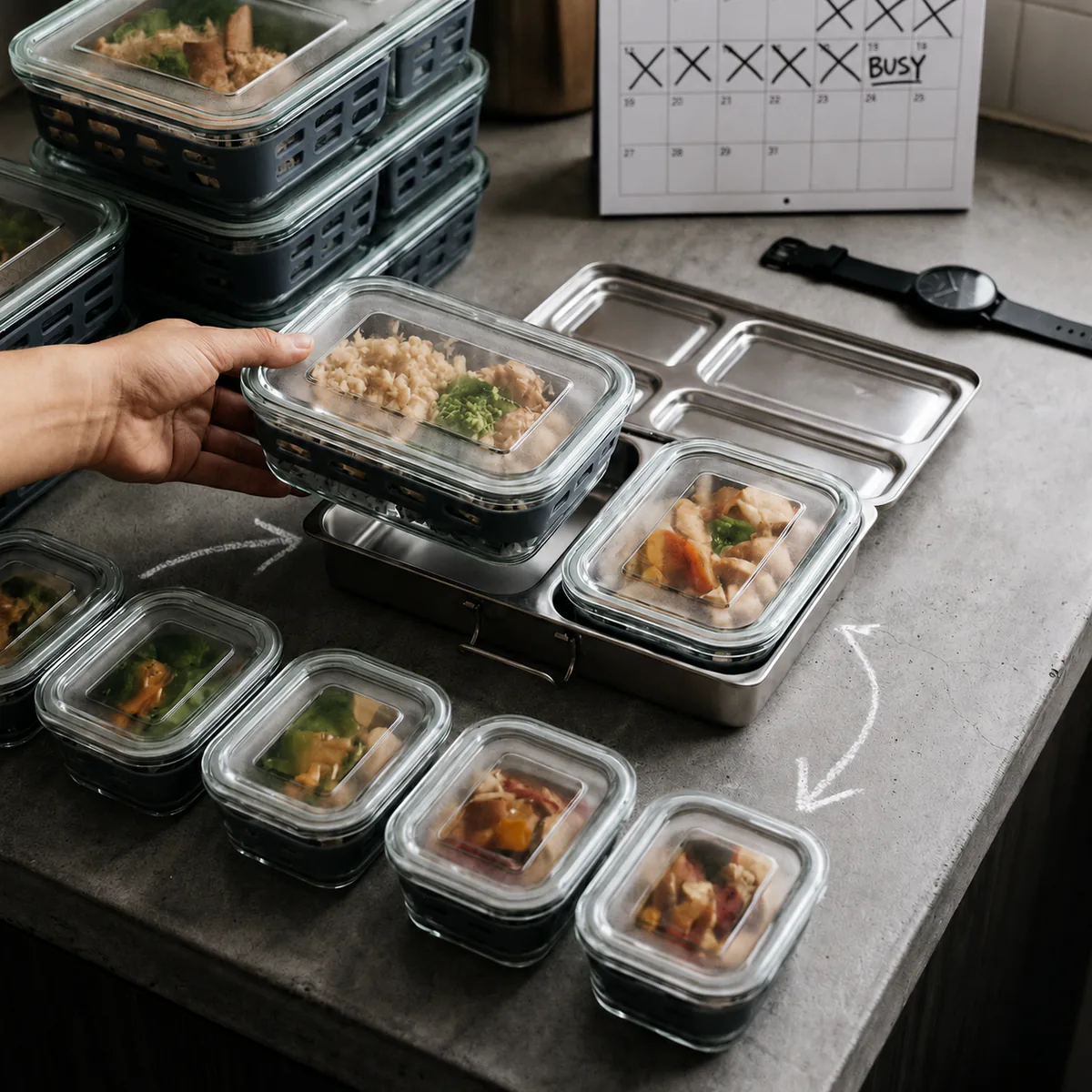
Why high-pressure weeks break good plans
During travel, deadlines, or irregular schedules, the issue is usually not nutrition knowledge. The issue is execution friction.
Plans should get simpler as constraints rise.
A practical structure that holds up
Use a short list of defaults:
- A dependable breakfast pattern.
- One or two fast lunch patterns.
- A simple dinner structure with easy swaps.
- Backup snacks for schedule disruptions.
Keep each option realistic for your environment and budget.
Swap rules that preserve momentum
When the ideal meal is not available, use “next best” decisions:
- Replace missing components with similar options.
- Keep meal timing predictable when possible.
- Return to baseline structure at the next opportunity.
Turn defaults into a working nubi flow
In nubi, “default meals” should become things you can actually use:
- generate repeatable options in Meal Plan,
- review foods to add or avoid in My Plan,
- and add useful suggestions into Meal Diary when you want to log them.
Behavior-first framing
Good coaching should reinforce progress language:
- support consistency,
- offer practical next actions,
- and avoid perfection expectations.
The objective is better routine adherence over time, not perfect daily execution.
If you want to see how nubi turns defaults into plan, suggestions, and meal review, start at Features and How it works.