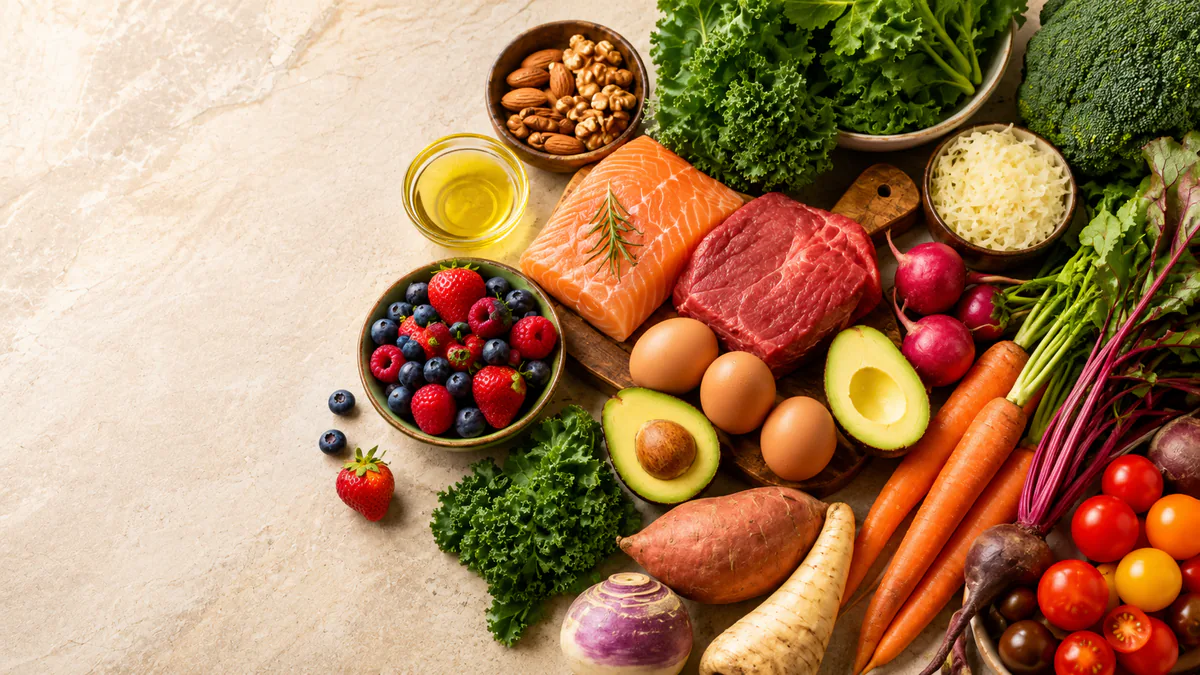
What paleo means in practice
The paleo diet, short for Paleolithic diet, is an eating pattern based on the idea of eating foods presumed to resemble what humans ate before agriculture.
The paleo idea is simple in practice: build meals from whole foods such as:
- meat and fish,
- eggs,
- vegetables,
- fruit,
- nuts and seeds,
- and natural fats.
At the same time, most paleo approaches remove:
- grains,
- legumes,
- refined sugar,
- and most dairy.
That gives the plan a strong identity, but also a stronger exclusion list than the Mediterranean, MIND, or DASH patterns.
Why some people like it
Paleo often appeals to people who want a cleaner-feeling rule set:
- eat whole foods,
- reduce ultra-processed products,
- prioritize protein and vegetables,
- and remove a few food groups entirely so decisions feel simpler.
For some users, that clarity helps. For others, it makes social eating and grocery flexibility harder than expected.
What the science says about why paleo is considered beneficial
Paleo has less research behind it than some of the other standard plans, but some studies still suggest it may improve some key biomarkers for health [2].
That does not prove the exclusions are necessary for everyone. It does help explain the appeal:
- the plan sharply reduces ultra-processed foods,
- it tends to increase protein and vegetable intake,
- and it can create a simpler food environment for people who do better with clearer boundaries.
How the standard nubi paleo plan is structured
In nubi, the standard paleo template currently uses a macro split of roughly 30% carbohydrate, 30% protein, and 40% fat.
Its strongest priorities are:
- high-quality protein sources,
- vegetables and fiber,
- omega-3-friendly seafood choices,
- healthy fats such as olive oil and avocado,
- and reducing grains, legumes, refined sugars, industrial seed oils, and ultra-processed packaged foods.
The template also includes fermented foods and colorful produce as supportive defaults.
Who this plan may fit
This pattern may fit people who:
- prefer a whole-food framework,
- like protein-forward meals,
- want a more structured alternative to a standard mixed diet,
- or suspect that fewer processed foods and simpler ingredients help them stay consistent.
It may be a weaker fit if grains, legumes, or dairy are core foods you enjoy and tolerate well, because the exclusions can create more friction than benefit.
Tradeoffs to think about honestly
Paleo is often described as simple, but simple rules can still have costs.
The big ones are:
- excluding nutritious food groups that many people do well with,
- making travel, shared meals, and restaurant choices narrower,
- and turning “whole food” into an identity marker rather than a practical tool.
The most useful question is not whether paleo sounds clean. It is whether the pattern makes your real week easier to execute without shrinking your food world more than necessary.
A practical first week
A better first week usually means:
- protein plus vegetables at the center of lunch and dinner,
- one fruit-and-nuts or eggs-based breakfast default,
- a few simple starch decisions around root vegetables or squash,
- and one backup meal you can repeat when time is low.
That is enough to see whether the structure helps before you overcomplicate it.
How this fits the nubi product
In nubi, the paleo standard plan gives you a whole-food starting structure that is more defined than Mediterranean-style eating but less extreme than keto.
The useful workflow is:
- activate the standard plan in the Marketplace,
- review the food choices in My Plan,
- generate matching meals in Meal Plan,
- and update the plan in chat if the exclusions are not fitting your lifestyle or preferences.
That keeps the plan practical instead of ideological.
General wellness scope
This article provides general wellness and nutrition guidance only. It is not medical advice and is not intended to diagnose, treat, cure, or prevent disease. If you have digestive disease, food-allergy concerns, kidney disease, or a history of restrictive eating, work with a qualified clinician before making major dietary exclusions.