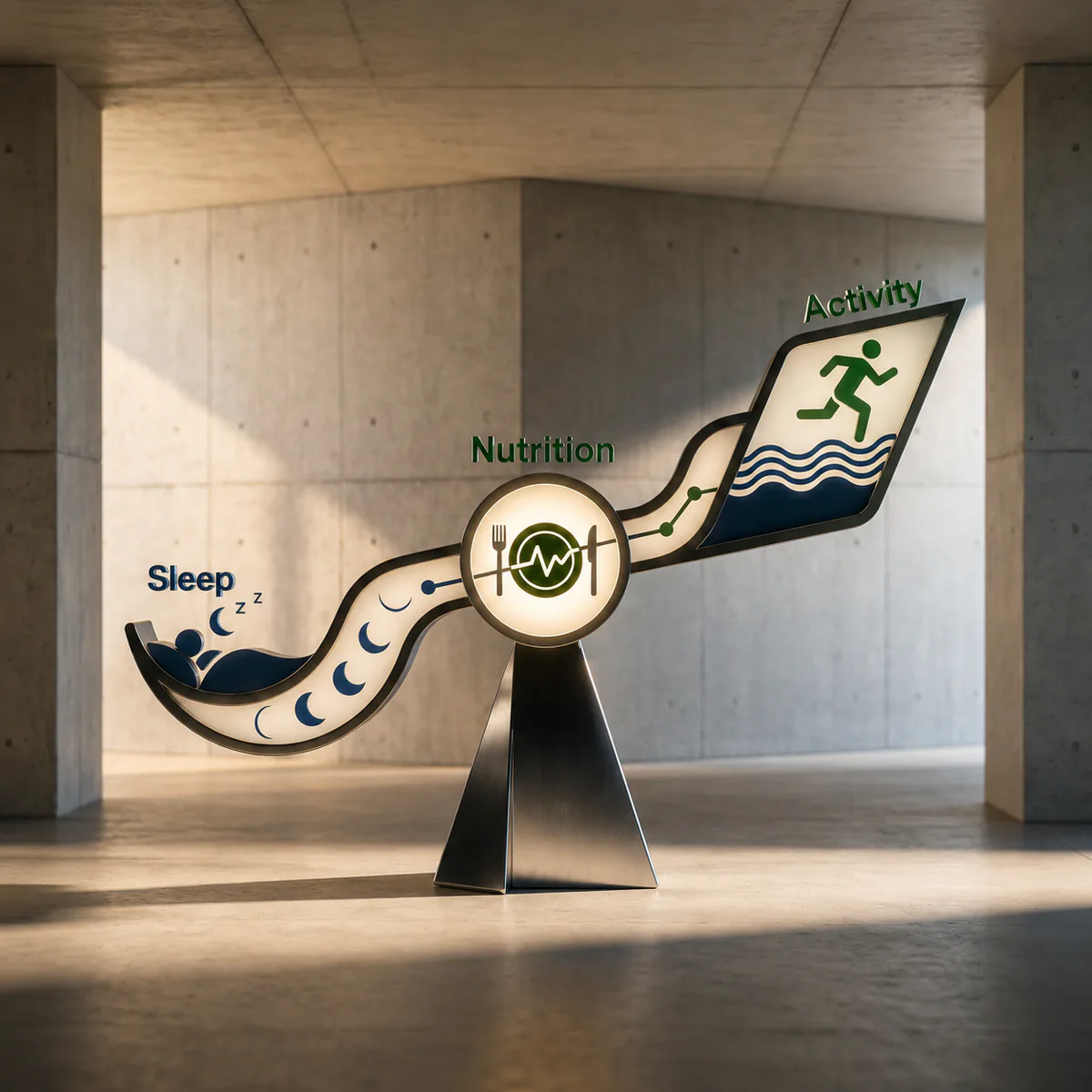
Start with trends, not a single number
The most useful question is not “What did my wearable say last night?” It is: “What trend is my week showing?”
As a default, consider a 3–7 day window and keep the response simple:
- adjust structure before you adjust complexity,
- change one thing at a time,
- and pick actions you can repeat on a busy day.
If sleep is trending lower: simplify and stabilize
When sleep is consistently lower (or schedule pressure is high), the goal is usually less decision load and more consistency.
Practical first adjustments:
- Keep meal timing more regular than usual.
- Use two to four repeatable “default meals” you can execute quickly.
- Prioritize meals that feel satisfying and easy to repeat (not restrictive or novel).
- Aim for a balanced plate pattern (protein + fiber-rich foods + a carb source when it helps consistency).
In nubi, that kind of change should show up as a plan update in chat, adjusted meal timing in My Plan, and refreshed suggestions in Meal Plan.
If activity increases: protect fueling consistency
When activity volume rises, the common failure mode is not “wrong macros.” It is missing meals or under-planning, then over-correcting later.
Practical first adjustments:
- Add one planned snack or mini-meal around your highest-demand window.
- Make lunch and dinner easier to execute (prep, grocery defaults, predictable options).
- Keep hydration and meal timing consistent on high-demand days.
If both sleep and activity are messy: choose the smallest effective change
If recovery is down and stress is up, trying to “optimize everything” tends to backfire. Pick the smallest change you can repeat for a week:
- Make breakfast and lunch predictable.
- Use a single “next best” swap rule (example: add a protein + produce component when a meal is missing it).
- Reassess after a few days of consistent execution.
How to apply this without overcomplicating it
- Simple approach: choose two default meals + one backup snack and keep timing regular.
- Steady approach: log one meal per day and ask, “What’s one change based on my recent sleep and activity trends?”
- Deep-dive approach: focus on week-over-week deltas and avoid overreacting to noisy daily swings.
If you want context translated into clear next actions, start at How it works and Features.