What the MIND diet is
The MIND diet is a hybrid of Mediterranean and DASH eating patterns with an extra brain-health angle.
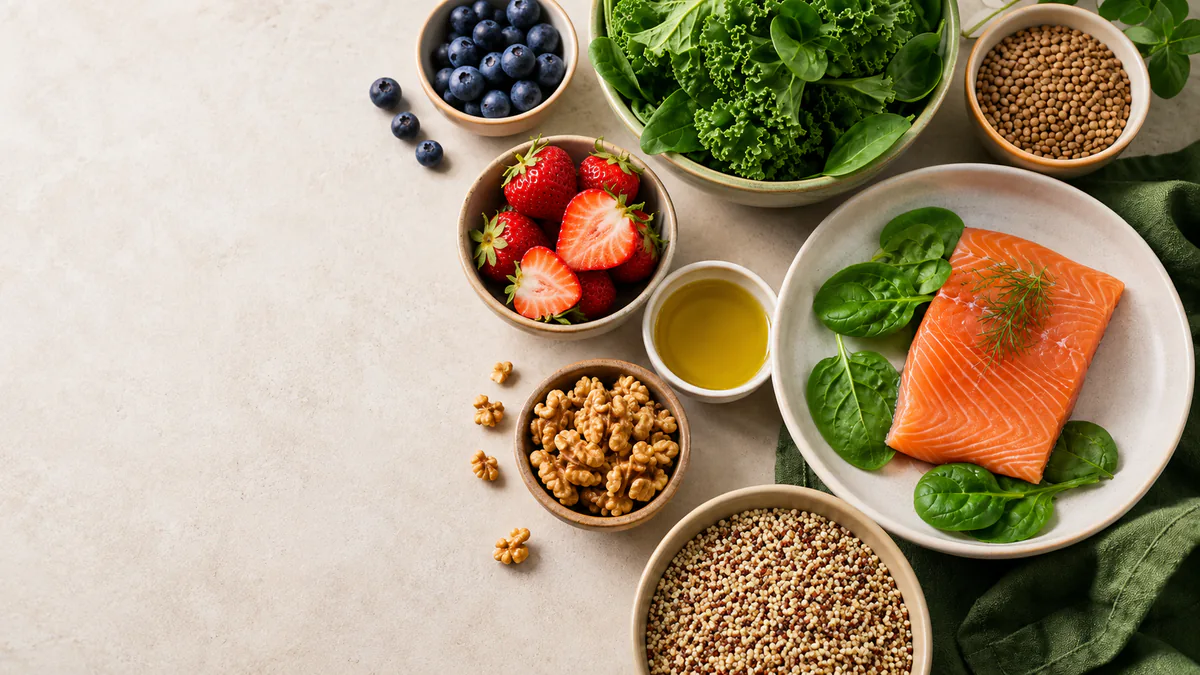
In practical terms, it tends to emphasize:
- leafy greens,
- berries,
- beans and lentils,
- nuts,
- olive oil,
- whole grains,
- and fish.
It also tends to push down foods like fried items, pastries, processed meats, and butter-heavy patterns.
Why people are interested in it
The appeal of MIND is that it feels specific enough to act on, but not so restrictive that normal life becomes impossible.
It gives people a useful frame:
- eat more plants,
- keep saturated fat pressure lower,
- choose higher-quality fats more often,
- and repeat a few brain-supportive foods consistently.
That structure is easier to live with than trying to optimize every nutrient in isolation.
What the science says about why MIND is considered beneficial
The MIND diet gets attention because it is not only a branding exercise. Studies suggest that people who follow this pattern more closely may have better brain health as they age, and researchers are still actively studying it [1][2].
That does not mean results are guaranteed. It does help explain why the plan is considered promising:
- it concentrates foods associated with better overall diet quality,
- it lowers pressure from fried foods, pastries, and saturated-fat-heavy patterns,
- and it combines a brain-health framing with food choices that also align with broader cardiovascular guidance [3].
How the standard nubi MIND plan is structured
In nubi, the standard MIND template currently uses a moderate macro split of roughly 45% carbohydrate, 20% protein, and 35% fat.
Its strongest priorities are:
- leafy greens and berries,
- olive oil and other unsaturated fats,
- fiber and lower added sugars,
- omega-3-rich fish,
- and limiting saturated-fat-heavy or fried patterns.
The food emphasis in the template is especially clear:
- foods to add include leafy greens, berries, olive oil, fish, nuts, beans, and whole grains,
- while foods to avoid include fried foods, butter-heavy dairy patterns, processed meats, pastries, and refined grains.
Who this plan may fit
The MIND pattern can be a strong fit for people who:
- want a plant-forward default,
- like Mediterranean-style foods,
- want a plan that feels balanced rather than extreme,
- and care about long-term routine quality more than short-term diet intensity.
It is often easier to sustain than plans built around very low carbohydrate intake or long exclusion lists.
Tradeoffs and limits
The evidence around MIND is interesting, but it is important to stay honest about scope.
What this plan does well:
- gives structure to better food quality,
- encourages repeatable whole-food patterns,
- and aligns with broader heart-healthy eating guidance.
What it does not do:
- guarantee cognitive outcomes,
- replace clinical care,
- or remove the need to think about sleep, exercise, recovery, and overall health context.
If a plan gets described as “brain healthy,” the useful question is still: can you actually follow it on a Tuesday when your week is messy?
A practical first week
A good first week on this pattern is usually simple:
- make leafy greens and berries visible defaults,
- switch your main added fat to olive oil,
- keep one bean or lentil meal in rotation,
- and add one reliable fish meal without trying to redesign your whole life.
That is enough to make the pattern real.
How this fits the nubi product
In nubi, a standard plan should become a working routine, not a static article.
For the MIND template, that means:
- activate the standard plan in the Marketplace,
- review the food priorities in My Plan,
- generate matching meals in Meal Plan,
- and update the plan in chat when your schedule, preferences, or training context changes.
The useful part is not the label. It is whether the pattern can keep fitting real life over time.
General wellness scope
This article provides general wellness and nutrition guidance only. It is not medical advice and is not intended to diagnose, treat, cure, or prevent disease. For memory concerns, neurologic conditions, or medication-related nutrition needs, work with a qualified healthcare professional.