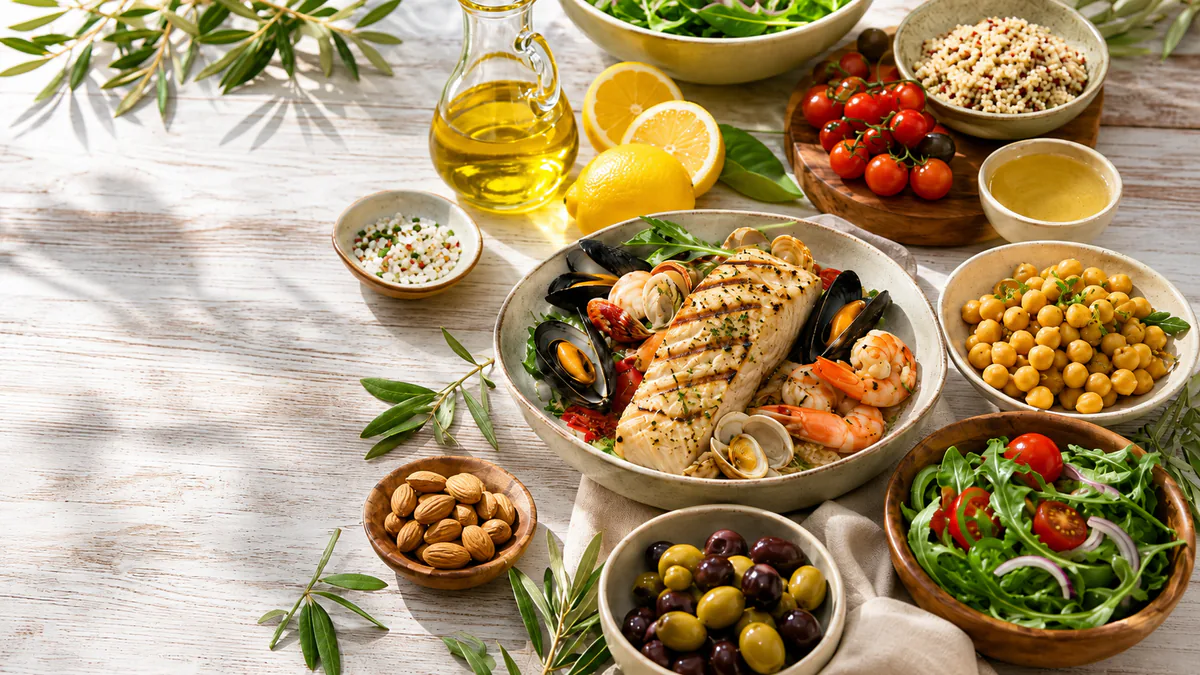
What people mean by the Mediterranean diet
The Mediterranean diet is less a strict prescription and more a recognizable eating pattern.
Its common themes are:
- lots of vegetables,
- legumes and whole grains,
- olive oil as a main added fat,
- nuts and seeds,
- fruit,
- and seafood more often than processed or red meat.
That makes it appealing because it feels like an actual way of eating, not a high-pressure protocol.
Why it stays popular
Many eating plans work on paper and fall apart in daily life. Mediterranean-style eating tends to hold up better because it is:
- flexible,
- social,
- familiar in many cuisines,
- and easier to adapt across weekdays, weekends, and shared meals.
It usually does not require you to fear whole food groups or chase niche products. That matters more than people think.
What the science says about why Mediterranean eating is considered beneficial
Mediterranean-style eating has stayed influential partly because it feels practical and has been studied a lot [2][3]. Studies connect Mediterranean-style eating with better heart-health outcomes and a lower overall risk of mortality over time [2][3].
That helps explain why the pattern is so often described as beneficial:
- the fat pattern tends to emphasize unsaturated sources such as olive oil and nuts,
- legumes, seafood, vegetables, and whole grains increase nutrient density and fiber,
- and the pattern is flexible enough that people may be more likely to sustain it over time.
How the standard nubi Mediterranean plan is structured
In nubi, the standard Mediterranean template currently uses a macro split of roughly 45% carbohydrate, 20% protein, and 35% fat.
Its strongest priorities are:
- extra-virgin olive oil and other unsaturated fats,
- fiber-rich legumes and whole grains,
- seafood and oily fish,
- leafy greens and colorful vegetables,
- and keeping processed meats, sugary desserts, and refined grains in a lower role.
The template also puts meaningful weight on micronutrient-dense plant foods and omega-3-friendly choices.
Who this plan may fit best
This pattern often makes sense for people who:
- want a flexible long-term default,
- enjoy cooking or assembling simple whole-food meals,
- like grains, beans, and olive-oil-based meals,
- and want a plan that feels supportive rather than rigid.
It can work especially well when the real goal is consistency, not diet drama.
Tradeoffs to be honest about
Mediterranean eating is practical, but it still has failure modes.
Common ones include:
- calling a meal “Mediterranean” when it is still mostly refined carbs and low protein,
- overdoing calorie-dense foods like oils, nuts, or restaurant portions,
- and assuming the plan is automatically healthy even when the week is still heavy on pastries, alcohol, or ultra-processed snacks.
A useful plan needs a real default plate, not just a healthy-sounding identity.
A simple first-week version
For most people, a strong first week looks like:
- olive oil as the main added fat,
- at least one bean or lentil meal,
- one or two seafood meals,
- vegetables anchored into lunch and dinner,
- and a more intentional swap away from processed meat or dessert-heavy patterns.
You do not need to overhaul every meal to make the pattern meaningful.
How this fits the nubi product
In nubi, the standard Mediterranean plan is meant to be a starting structure you can actually use.
That means:
- activate the standard plan in the Marketplace,
- use My Plan to see the food emphasis clearly,
- generate matching meals in Meal Plan,
- and refine the plan in chat when your appetite, schedule, goals, or preferences change.
The useful part is not only what foods belong in the pattern. It is how quickly you can turn the pattern into repeatable meals.
General wellness scope
This article provides general wellness and nutrition guidance only. It is not medical advice and is not intended to diagnose, treat, cure, or prevent disease. If you need disease-specific nutrition treatment or medication-related guidance, work with a qualified clinician.