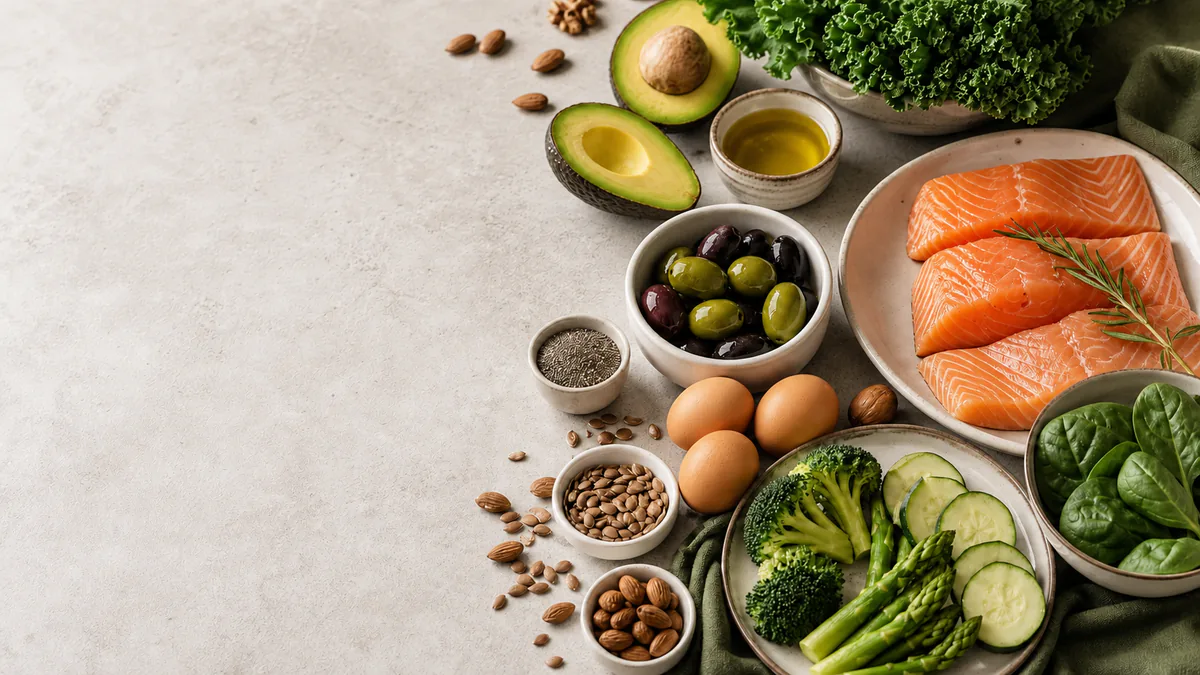
What a ketogenic plan is
A ketogenic plan is a very low-carbohydrate, high-fat eating pattern designed to keep carbohydrate intake low enough that the body shifts toward producing ketones for fuel.
That makes it a different category from a general “eat fewer refined carbs” plan. Keto is not just cleaner eating. It is a specific macro structure with a narrower margin for drifting.
Why some people choose it
People are usually drawn to keto because they want:
- a stronger low-carb structure,
- fewer blood-sugar swings,
- a clearer rule set,
- or a plan that feels appetite-controlling and simple once the food environment is set up.
For some people, that structure feels clarifying. For others, it feels socially and practically expensive.
What the science says about why keto is considered beneficial
Keto is usually considered beneficial because studies suggest it can help some people with short-term weight loss and blood sugar control [1][2]. That helps explain why interest in it stays high.
The important nuance is that macro ratio alone does not make the pattern high quality. When about 70% of energy comes from fat, the quality of that fat becomes a major part of the plan.
That is one reason nubi emphasizes:
- olive oil, avocado, nuts, seeds, fish, and other whole-food fat sources,
- not just hitting a fat number by relying on processed keto products,
- and keeping the overall pattern nutrient-dense instead of treating keto as a permission slip for low-quality fats.
How the standard nubi ketogenic plan is structured
In nubi, the standard ketogenic template currently uses a macro split of roughly 70% fat, 25% protein, and 5% carbohydrate.
The template emphasizes:
- whole-food fat sources, because fat quality is central when the plan gets about 70% of energy from fat,
- moderate protein rather than extremely high protein,
- low-carb vegetables,
- nuts, seeds, olives, avocado, eggs, fish, and meats,
- and attention to sodium, potassium, magnesium, and overall food quality.
Foods pushed down include refined grains, sugary foods, high-sugar fruit patterns, starchy vegetables, and ultra-processed packaged foods.
Who this plan may fit
This plan may be a better fit for people who:
- strongly prefer low-carb eating,
- are comfortable with repetition and tighter food boundaries,
- and want a standard template that clearly deprioritizes grains, legumes, and most starches.
It tends to be a worse fit for people who want maximum flexibility, eat socially very often, or do best with more plant carbohydrate variety.
Tradeoffs that matter
Keto is one of the more demanding standard plans, so the tradeoffs matter more.
Common friction points include:
- limited fruit, grain, and legume variety,
- more meal-planning effort in mixed social settings,
- easy drift toward high saturated fat or ultra-processed “keto” products,
- and the fact that short-term enthusiasm does not always equal long-term fit.
A keto plan can look clean on a macro chart while still being weak on food quality. That is one of the main reasons nubi emphasizes whole-food fats and lower-carb vegetables, not just carb minimization by itself.
What a practical first week looks like
A strong first week usually means:
- choosing two or three repeatable breakfasts and lunches,
- building dinners around protein, non-starchy vegetables, and added fats,
- removing the obvious carb defaults from your environment,
- and planning one realistic backup option for travel or busy evenings.
Without that backup structure, the plan tends to break under ordinary schedule pressure.
How this fits the nubi product
In nubi, the ketogenic standard plan gives you a ready-made low-carb baseline.
From there, the product flow should be:
- activate the standard plan in the Marketplace,
- review the plan in My Plan,
- generate meals in Meal Plan that respect the low-carb structure,
- use Meal Diary feedback to see whether meals actually matched the plan,
- and adjust in chat if adherence, energy, or food preferences are shifting.
That matters because keto only works as a useful template if it stays executable.
General wellness scope
This article provides general wellness and nutrition guidance only. It is not medical advice and is not intended to diagnose, treat, cure, or prevent disease. Ketogenic diets can be inappropriate for some people and should be discussed with a qualified clinician when medical conditions, medications, pregnancy, or a history of disordered eating are relevant.