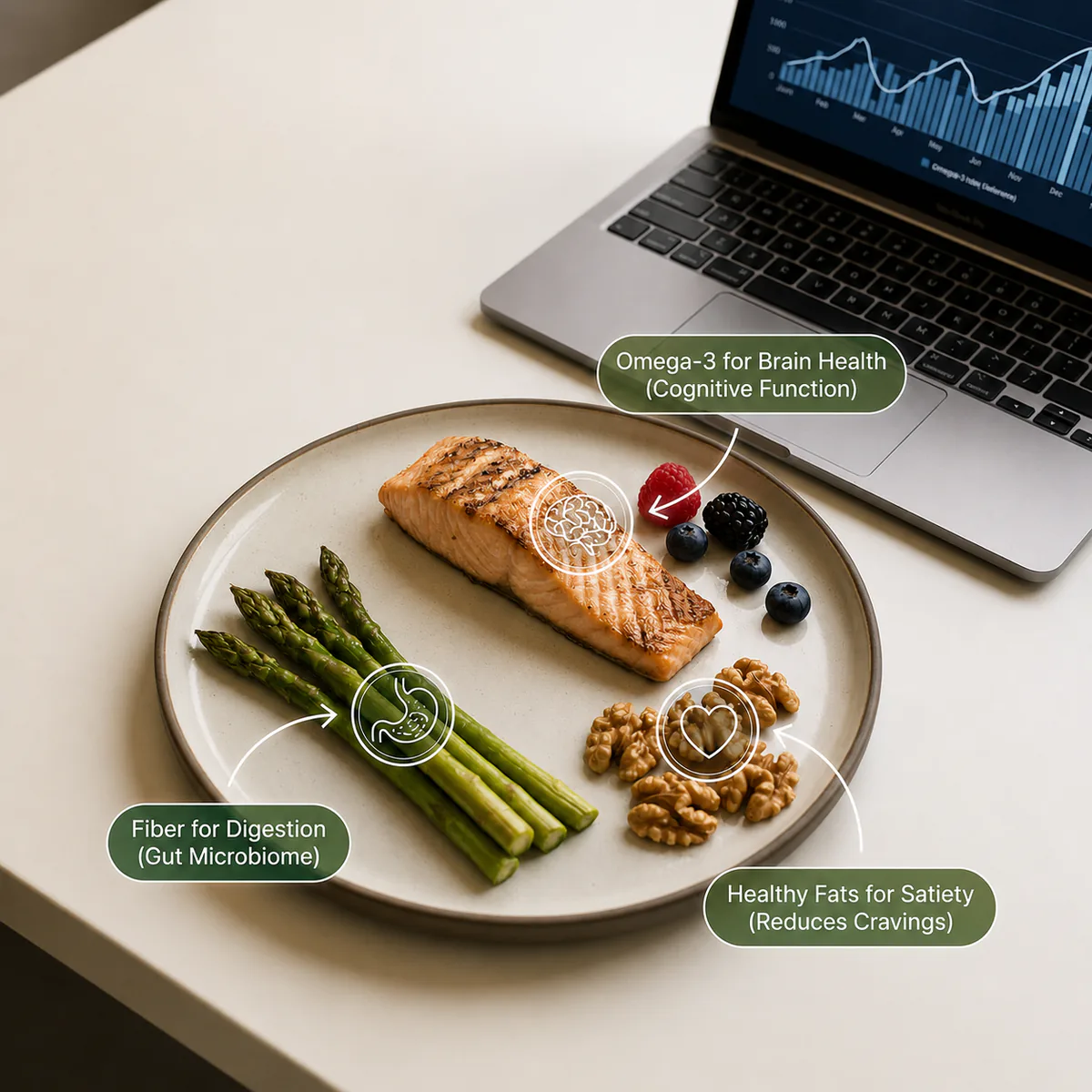
Explainable beats prescriptive
People don’t stick to rules they don’t understand. Explainable recommendations make it easier to adapt when:
- your schedule changes,
- sleep drops,
- travel happens,
- or motivation is low.
Three layers of explanation (use the one you need)
- Simple: one sentence (“Because your week is busy, we’re simplifying meals to reduce decision load.”)
- Practical: the mechanism you can act on (“Regular meal timing reduces late-day chaos, so we’ll anchor breakfast and lunch.”)
- Deep dive: assumptions and alternatives (“If timing isn’t the issue, we’ll adjust structure or convenience instead.”)
What good explanations include
Useful explanations tend to have:
- the why (what problem it solves),
- the tradeoff (what it costs),
- and the fallback (what to do when the ideal isn’t possible).
In nubi, that kind of explanation should show up when you update a plan in chat, review a logged meal in Meal Diary, or compare options in Meal Plan.
Choose the assistant style that fits you
In nubi, you choose the assistant style that best matches how you want guidance delivered.
- Quick & actionable: short messages, bullet points, and clear next steps.
- Direct & pragmatic: straightforward recommendations with minimal fluff.
- Educational & science-based: more of the “why,” including reasoning and tradeoffs behind suggestions.
- Warm & supportive: a gentler tone with encouragement and lower pressure.
- Coach & accountability: more goal-focused nudges to help you stay consistent.
That means explainability should feel personalized. Some users want the short version. Others want the reasoning behind the recommendation. The right product does both without making the experience confusing.
If you want to see how nubi turns explanation into product behavior, start at How it works and Features.