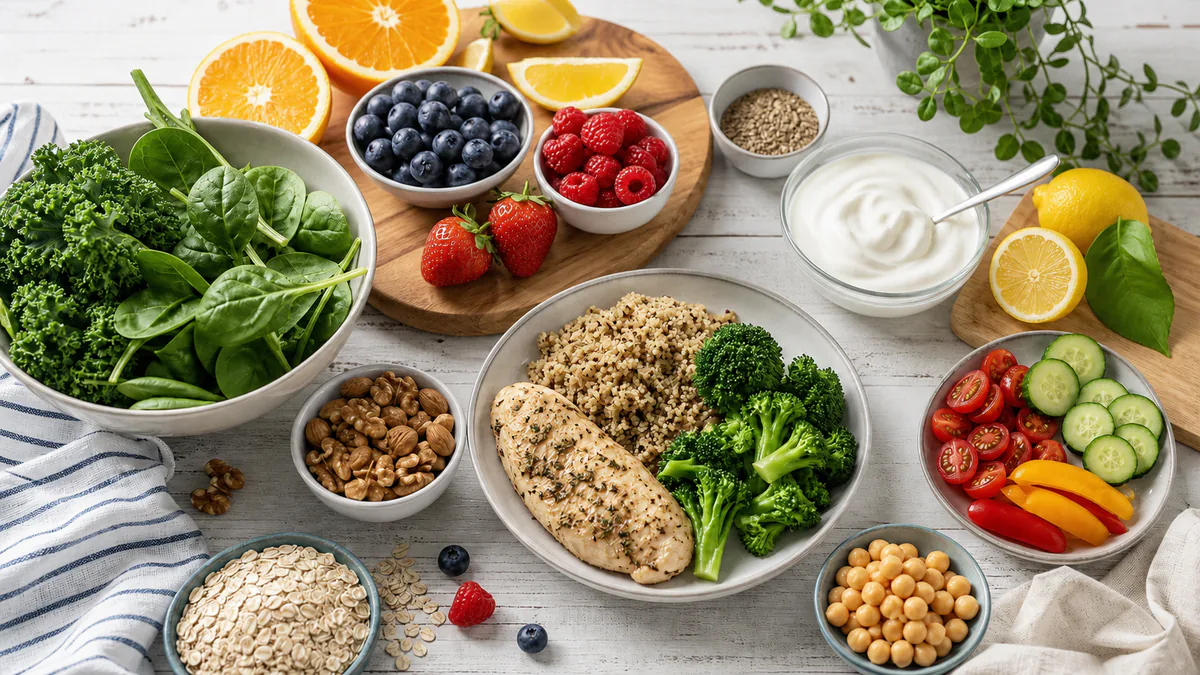
What the DASH diet plan actually is
DASH stands for Dietary Approaches to Stop Hypertension. In practice, it is a food pattern built around:
- vegetables and fruit,
- whole grains,
- beans, nuts, and seeds,
- lean protein sources,
- low-fat dairy,
- and lower sodium intake.
The core idea is not a special product or a rigid menu. It is a repeatable meal structure that helps shift the overall pattern toward more fiber, minerals, and minimally processed foods.
Why people choose it
People often look at DASH when they want a more heart-supportive routine without moving into a highly restrictive diet style.
Its main practical strengths are:
- familiar foods that are easy to find,
- a clear pattern for grocery decisions,
- and a strong emphasis on potassium, magnesium, calcium, and fiber-rich foods.
That is also why DASH overlaps with broader heart-health guidance from the American Heart Association: more whole foods, less sodium, fewer refined grains, and fewer ultra-processed defaults [2].
What the science says about why DASH is considered beneficial
One reason DASH became so influential is that it was studied as a full eating pattern that has shown benefits in blood pressure [3]. In one key study, people following the DASH-style pattern saw better blood pressure results than people eating the comparison diet [3]. That helps explain why DASH still shows up so often in heart-health guidance: the benefits are not just theoretical.
The likely reasons are practical and cumulative:
- more potassium, magnesium, and calcium-rich foods,
- more fiber and minimally processed foods,
- less sodium from highly processed products,
- and a meal structure that is easier to repeat consistently than highly restrictive approaches.
How the standard nubi DASH plan is structured
In nubi, the standard DASH template is not just a label. It has a specific nutrition emphasis behind it.
The current standard template uses:
- a balanced, higher-carbohydrate macro split of roughly 55% carbohydrate, 20% protein, and 25% fat,
- strong priority on fiber and lower added sugars,
- strong emphasis on potassium, magnesium, calcium, and sodium awareness,
- and food choices centered on leafy greens, fruit, low-fat dairy, whole grains, lean proteins, and unsalted nuts or seeds.
Foods the template pushes down include high-sodium processed foods, cured meats, fried foods, and sugary drinks or desserts.
Who this plan may fit best
The DASH pattern often makes sense for people who:
- want a general heart-healthy baseline,
- prefer moderate structure instead of extreme restriction,
- do well with grains, legumes, and dairy,
- or want a plan that feels familiar for family meals and normal grocery shopping.
It may be less appealing if you strongly prefer a lower-carbohydrate approach, avoid dairy, or want a plan built around a narrower food philosophy.
Tradeoffs to know before choosing it
DASH is practical, but it is not magic.
Common friction points include:
- sodium can still creep up fast when meals rely on packaged sauces, breads, restaurant food, or deli meat,
- some people hear “heart healthy” and accidentally build meals that are too snacky or too low in protein,
- and low-fat dairy is part of many DASH interpretations, which may not fit every preference or digestive situation.
The point is not to follow a perfect textbook version. The point is to make the pattern easier to execute in your real week.
A simple first-week way to use it
A useful first week usually looks like:
- one fruit and one vegetable anchor at most meals,
- one reliable whole grain you will actually eat,
- one or two lean protein defaults,
- and one lower-sodium backup meal for busy evenings.
That kind of repeatable structure is more useful than chasing “healthy” meals that keep changing every day.
How this fits the nubi product
In nubi, a standard plan should help you start with a usable default, then adapt it as life changes.
For DASH, that means:
- activate the standard plan in the Marketplace,
- review the food emphasis and meal structure in My Plan,
- use Meal Plan to generate suggestions that match the template,
- and adjust the plan in chat if your schedule, appetite, or preferences change.
The standard template gives you the baseline. The useful part is how the app helps you keep it practical.
General wellness scope
This article provides general wellness and nutrition guidance only. It is not medical advice and is not intended to diagnose, treat, cure, or prevent disease. If you have hypertension, kidney disease, or other medical needs that change sodium, potassium, or fluid guidance, work with a qualified clinician.